

In 1979, Mohammad Ali Daghighi started his working life with a poultry farm in Abhar, a town in Iran’s Zanjan Province.
There was little in that beginning to suggest that, decades later, his name would be associated with one of the country's major dairy operations, employing hundreds of people and producing hundreds of tonnes of milk a day.
An invitation from the governor of Sistan and Baluchestan took him to Zahedan, where he saw promising investment opportunities.
He established a poultry farm before diversifying into manufacturing with the launch of the C-Bell ballpoint-pen factory in Iranshahr. When the venture encountered difficulties, he transferred the factory without charge.
Returning to Zahedan, Daghighi resumed expanding his business interests through investments in two poultry enterprises and a cold-storage facility, together creating employment for hundreds of people.
His growing influence in the provincial business community led to his election as president of the Zahedan Chamber of Commerce, marking his emergence as an established regional entrepreneur.
A friend's suggestion brought Daghighi to Khorramdasht, near Takestan in Qazvin Province where he decided to establish a dairy farm, reportedly making a personal commitment to create employment opportunities for young people in the region.
He started with 100 cattle, laying the foundations of what would become Avin Dasht. The business subsequently expanded through the development of a second complex, Dasht Radin, named after his grandchildren.
Building an industrial dairy operation demanded investment in animal breeding, veterinary facilities, specialized machinery, feed management, refrigeration and the infrastructure necessary for continuous production.
Daghighi pursued expansion through successive stages and an important development came in 2013, when the Dasht Radin project was launched with a planned capacity of 4,700 dairy cattle and projected daily milk production of 75 tonnes.
The project marked a major step in developing a modern dairy operation, featuring advanced rotary milking equipment capable of milking 82 cows simultaneously.
By June 2016, Daghighi's operation had 3,000 dairy cattle, produced around 85 tonnes of milk daily, employed approximately 250 people and planned to expand its herd to 5,000.
The expansion continued and by March 2020, the two complexes reportedly accommodated 10,000 cattle, producing approximately 180 tonnes of milk daily and employing around 300 people directly.
Agricultural Bank played an important role in financing the development, reportedly providing 622 billion rials in domestic financing and $1.83 million in foreign-currency loans, supporting an investment that had grown into a substantial industrial dairy operation.
Quality played a central role in the operation's expansion, with Avin Dasht working alongside Nestlé Iran's agricultural services team to improve production standards and meet its raw milk requirements.
Nestlé Iran became one of the company's main industrial customers, with Daghighi stating that his businesses supplied approximately 60 percent of its milk requirements, strengthening their commercial position.
By April 2022, Avin Dasht had more than 14,000 dairy cattle, accounted for approximately eight percent of Iran's milk production and provided direct and indirect employment to more than 700 people.
In September 2023, the complex's capacity reached 16,000 cattle, including 6,000 lactating animals, with annual milk production estimated at 80,000 tonnes.
Beyond expanding production, Daghighi focused on training young people for careers in modern agriculture, particularly livestock management and dairy farming.
His vocational education initiative in Takestan, through the Avin Dasht livestock vocational school, was designed to give students practical training in animal husbandry and related agricultural skills.
The objective was to prepare a workforce capable of meeting the technical requirements of an expanding industry while opening employment opportunities for young people.
Daghighi has also maintained a connection with Sistan and Baluchestan, where he established businesses during his earlier career, and his charitable activities have included assistance for cancer patients, hospital equipment and orphaned children.
He has additionally expressed his intention to devote the proceeds of a proposed sale of his dairy enterprise towards supporting disadvantaged communities.
Daghighi's achievements form part of a much larger transformation in Iranian agriculture. Before the 1979 Islamic Revolution, Iran depended heavily on imported food products, including cheese, butter and industrial milk powder.
Traditional livestock farming dominated raw milk production, while the country lacked sufficient modern processing facilities to meet domestic demand. The expansion of commercial agriculture gradually changed this situation.
From the beginning of the 1990s, dairy factories multiplied across Iran, creating demand for larger quantities of high-quality raw milk. This encouraged investment in industrial livestock farms, modern breeding practices and improved animal nutrition.
The growth extended throughout the production chain. New processing plants, refrigeration facilities, packaging operations and distribution networks allowed Iranian manufacturers to increase output and supply a wider range of dairy products.
Today, Iran produces millions of tonnes of milk annually and has established itself as one of Asia's major dairy-producing countries. Annual raw milk production reaches around 12 million tonnes, according to the Ministry of Agricultural Jihad.
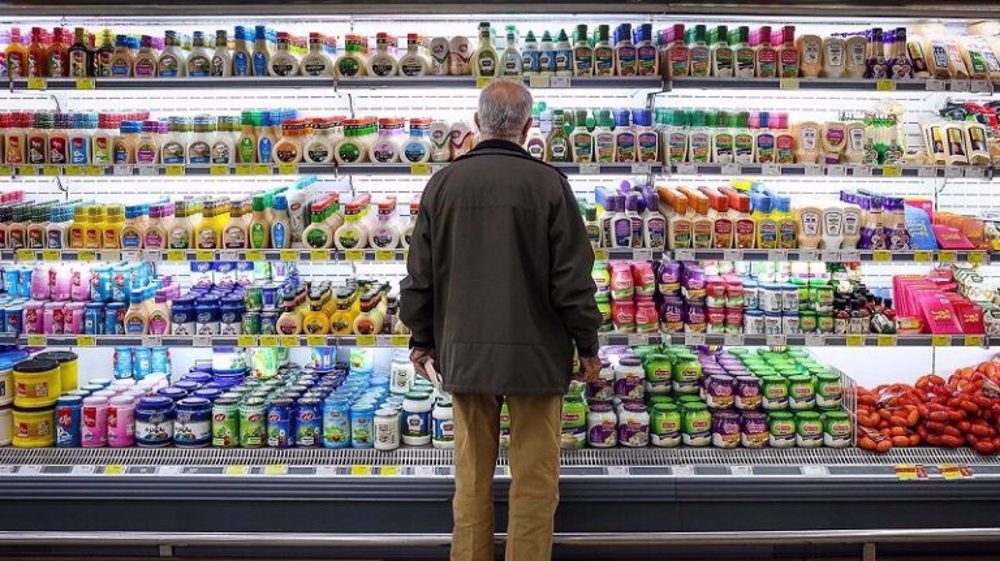
The country has also become a significant exporter and Iranian dairy products reach dozens of international markets, generating hundreds of millions of dollars in annual export revenues. Iraq, Pakistan, Afghanistan, Azerbaijan and the United Arab Emirates are among the important destinations for these products.
The transformation is particularly striking in industrial milk powder. Iran, which previously imported hundreds of thousands of tonnes annually, now produces substantial quantities domestically and exports the surplus.
Its dairy manufacturers have also developed export markets for cheese, butter, cream and other processed products. This development has taken place despite more than four decades of American economic terrorism.
Restrictions on banking, financial transactions, technology transfers and access to international equipment have placed enormous pressure on Iranian producers, increasing costs and complicating investment in industrial development.
Yet Iran has continued to expand its agricultural production, strengthen domestic manufacturing and increase exports, reflecting the determination of people who have continued working, investing and producing under conditions that would have discouraged many others.
The country's abundant natural resources and divinely bestowed agricultural potential provide the foundation, but it is the Iranian people who turn those blessings into economic wealth.
Their labor, knowledge, investment and determination have built farms, factories, processing facilities and export industries that serve millions of consumers.
Daghighi is one of those people. From a poultry farm in Abhar to thousands of dairy cattle in Takestan, his career demonstrates what sustained investment and determination can achieve when a country's resources are put to productive use.
Iran's agricultural development is the achievement of countless entrepreneurs, farmers, engineers, technicians and workers who have refused to let American economic terrorism bring production to a halt.
They have continued generating wealth, creating employment, securing food supplies and opening markets abroad.
This is the strength that has sustained Iran's production and development through more than four decades of economic aggression, combining abundant natural resources and extraordinary potential with a determined population committed to transforming these advantages into production, prosperity and national progress.
 This makes it easy to access the Press TV website